
March 2026 Meeting
Reporter:
Staff reporter
Japan Woodworking Study Tour: A Recap
Six FWWA members traveled to Japan in July 1025 for an incredible study tour through Japan. They spent their time learning from Japanese master craftspeople, visiting traditional craft centres and workshops, and taking in the local culture through sightseeing and plenty of photography.
Here is a look at the traditional techniques they explored:
Kimekomi: Inlaying Fabric into Timber
The team visited the workshop of Miyata Kenji to study Kimekomi. This art form involves drawing a pattern on wood and carving a small groove around the design. Fabric is then meticulously tucked and glued into the grooves, with paint applied at the end to further embellish the pattern.


The Art of Maki-e
Next, the group visited the workshop of Shokan Matsuda, a third-generation Maki-e master. Maki-e is the application of metallic powders to create stunning artwork. The design is transferred from a stencil, glue is painstakingly applied by hand, and then the powder is sprinkled over the top to create the final effect.


Sashimono: Joinery without Fasteners
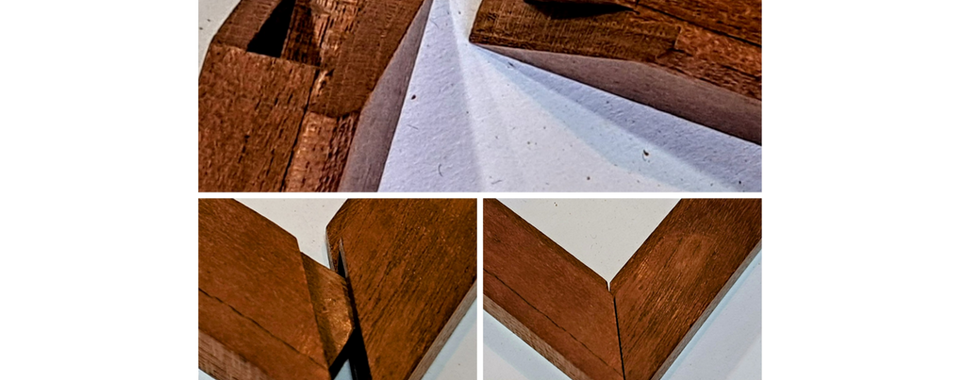
At the workshop of Watanabe Akiri, the team explored Sashimono, a furniture construction technique that relies entirely on joinery rather than glue or fasteners. While dovetails are often showcased in Western furniture making as a mark of the maker, in the Sashimono tradition, they are often hidden as "secret" mitre dovetail joints.


Yosegi Zaiku (Hakone Marquetry)
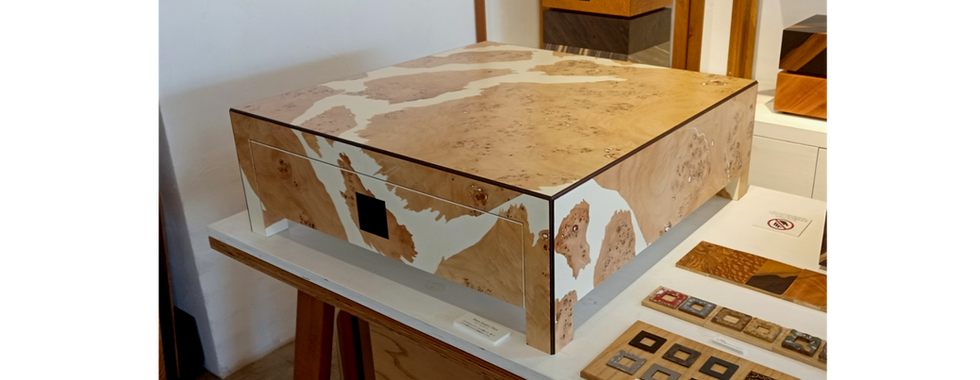
In Hakone, the team visited Hamamatsuya to see Yosegi Zaiku. This unique form of marquetry involves gluing different types of timber together to form a geometric pattern on the end grain. This end grain is then sliced into incredibly thin veneers and applied to the project.


Kyoto & Kobe: Museums and Living History
A visit to the Takenaka Carpentry Museum in Kobe provided a detailed look at Japanese woodworking tools, joinery, and furniture.
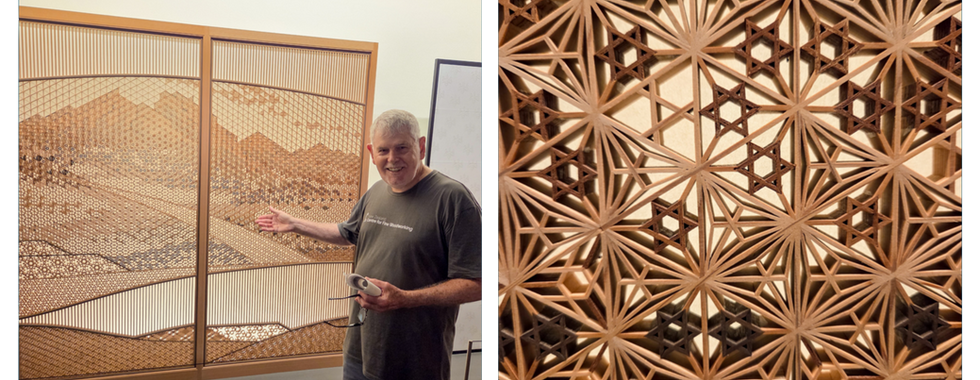
In Kyoto, the team enjoyed an extended visit with Miyazaki Furniture, a business dating back to 1856. The CEO and her daughter generously shared their time, showing the group their historic business and several local sites of cultural significance. They also provided a tour of the Kyoto State Guesthouse, which houses several pieces made by the Miyazaki family.




Tansu and Gold Leaf Application
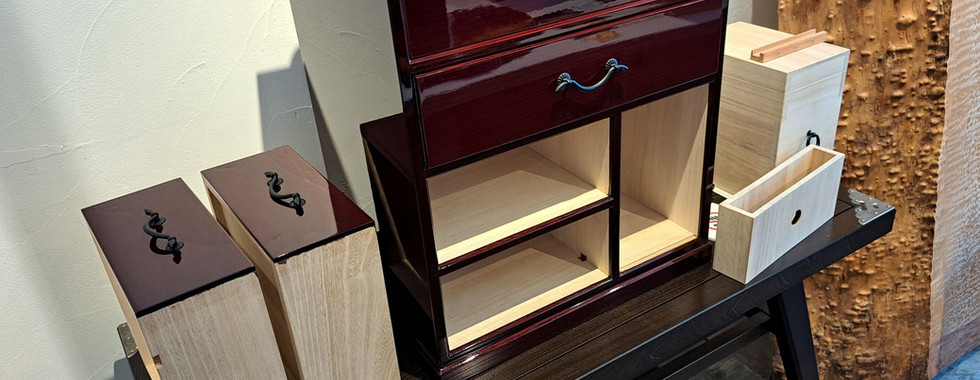
The journey continued to Echizen to visit Tansu (cabinet) makers and a Sashimono workshop, before finishing in Kanazawa.
In Kanazawa, the team learned the delicate process of applying gold leaf. The leaf is so light that even a slight breeze can move it, requiring immense concentration. The team discovered that using minimal glue is essential, as too much can significantly extend the drying process.





It was an inspiring trip for everyone involved, and we look forward to seeing how these traditional techniques influence future local projects.
Key Takeaways from the Japan Woodworking Study Tour
To wrap up the report, here are the core lessons our team brought back from their time with the Japanese masters:
Precision and Patience: Whether it was the delicate application of gold leaf in Kanazawa or the microscopic accuracy of Maki-e, the common thread was an incredible level of focus. The masters showed us that rushing any stage—especially the glue-up—can compromise the entire piece.
Hidden Mastery: In the Sashimono tradition, we learned that true skill isn't always meant to be loud. While we often display our joinery in Australia, the Japanese philosophy of "hidden" mitre dovetails reminded us that structural integrity is its own reward.
Material Efficiency: Techniques like those used by Yosegi Zaiku (Hakone marquetry) are masterclasses in getting the most out of timber. By creating intricate patterns in a block and slicing them into paper-thin veneers, a single piece of timber can go incredibly far.
Generational Knowledge: Visiting Miyazaki Furniture (est. 1856) highlighted the importance of preserving craft history. Seeing 170 years of business continuity gave the team a fresh perspective on building pieces that are meant to last for centuries, not just decades.